In the UK, pregnant women are offered a scan and blood test to see if their baby could be affected by Down's syndrome.
Traditionally, a clinical assessment is used, which avoids invasive testing to reduce any risks of miscarriage, and helps identify factors such as smoke status or diabetes, and includes ultrasound and biochemical measurements. The results from that data reveals whether there is a high chance or not of the baby being affected by Down's syndrome, requiring further testing.
The AI technology aims to improve how the data is read to increase accuracy and improve detection to make sure only the mother's of babies with the highest chance of being born with Down's syndrome are sent for more tests.
Jamie Osborne, principal clinical scientist at Bolton NHS Foundation Trust, said: ‘We're always working with numbers and vast databases in the labs, and with the rapid growth of AI it felt like an opportunity to use the technology to interpret and identify patterns in numbers that we might not be able to see.'
Osborne added: ‘It's been amazing to see the publication of our research, and for us as a lab it's exciting for the wider implications of it and how this may open doors in the future to use biochemical tests for the screenings of diseases such as pancreatic cancer, which is difficult to diagnose and has low survival rates.
‘Research in this area is currently in its very early stages, but we hope that our work here in Bolton has opened the door for ourselves and biomedical scientists around the world to take this further and understand how AI can be introduced to improve screening and health outcomes in the future.'
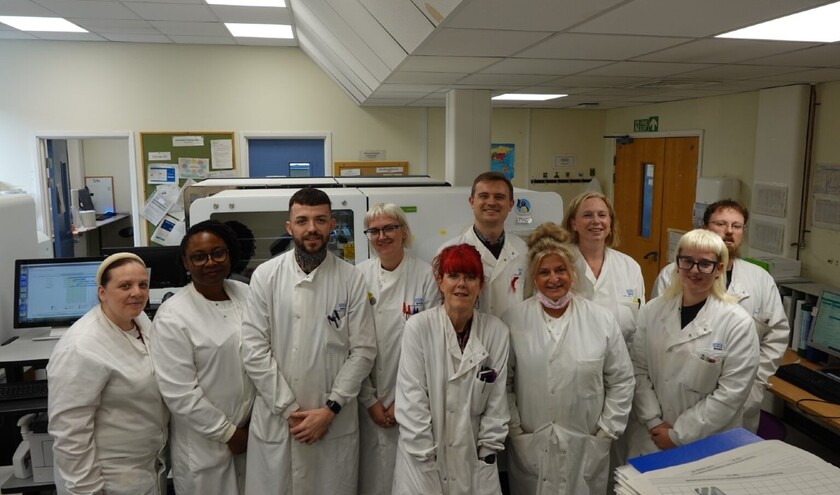
Bolton NHS Foundation Trust's Laboratory Medicine department hosts the second-largest Antenatal Screening Laboratory in the UK..